
Gurunanak Jayanti
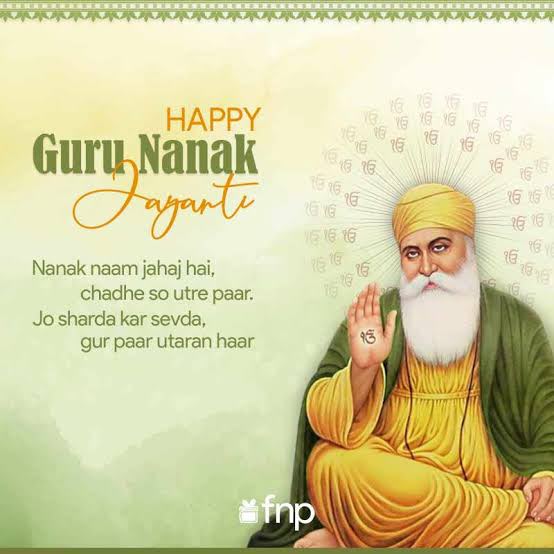
Guru Nanak Jayanti is celebrated as the birth anniversary of Guru Nanak Dev Ji, the first Guru and founder of Sikhism.
Alternative Names
Guru Nanak Gurpurab
Guru Nanak Prakash Utsav
Parkash Purab
When It Is Observed
Celebrated on Kartik Purnima (the full moon day of the month of Kartik in the Hindu/Sikh lunar calendar), which typically falls in November of the Gregorian calendar.
Key Traditions and Observances
Prabhat Pheris: Early-morning processions with devotional hymns that move through neighborhoods.
Akhand Path: A continuous 48-hour or 24-hour recitation of the sacred Sikh scripture, the Guru Granth Sahib Ji, held in gurdwaras.
Nagar Kirtan: Community street processions led by the Panj Pyare (the five beloved ones).
Langar: A free community kitchen served at gurdwaras to people of all backgrounds, emphasizing the Sikh principle of seva (selfless service).
Prayers and Kirtan: Devotional singing, scripture readings, and lighting lamps or candles at home and in gurdwaras.
The Three Pillars of Sikhism
Guru Nanak summarized a righteous life into three core principles
Guru Nanak summarized a righteous life into three core principles:
Naam Japo: Meditating and keeping God in your thoughts with every breath to stay grounded in integrity and mindfulness.
Kirat Karo: Earning an honest living through hard work without exploitation, fraud, or harming others.
Vand Chakko (Vand Chhako): Sharing what you have—whether food, wealth, or knowledge—with those in need and supporting the community.
Core Spiritual and Social Teachings
Ik Onkar (One God): Guru Nanak taught that there is only one universal, formless, timeless, and supreme Creator of all things, present everywhere.
Universal Equality: He rejected the rigid caste system, class divisions, and idol worship, asserting that all human beings are equal regardless of religion, caste, birth, or status.
Status of Women: He strongly advocated for gender equality, questioning the subjugation of women and affirming their equal rights in society and religious life.
Sewa (Selfless Service): True devotion to God requires active service to humanity and the community, famously reinforced through the institution of Langar (free communal kitchen).
Overcoming the Five Vices: He taught seekers to conquer the five inner evils that pull people away from truth: Kama (lust), Krodh (anger), Lobh (greed), Moh (attachment), and Ahankar (ego).
Sarbat Da Bhala: The daily prayer for the welfare, happiness, and prosperity of all humanity
y.